
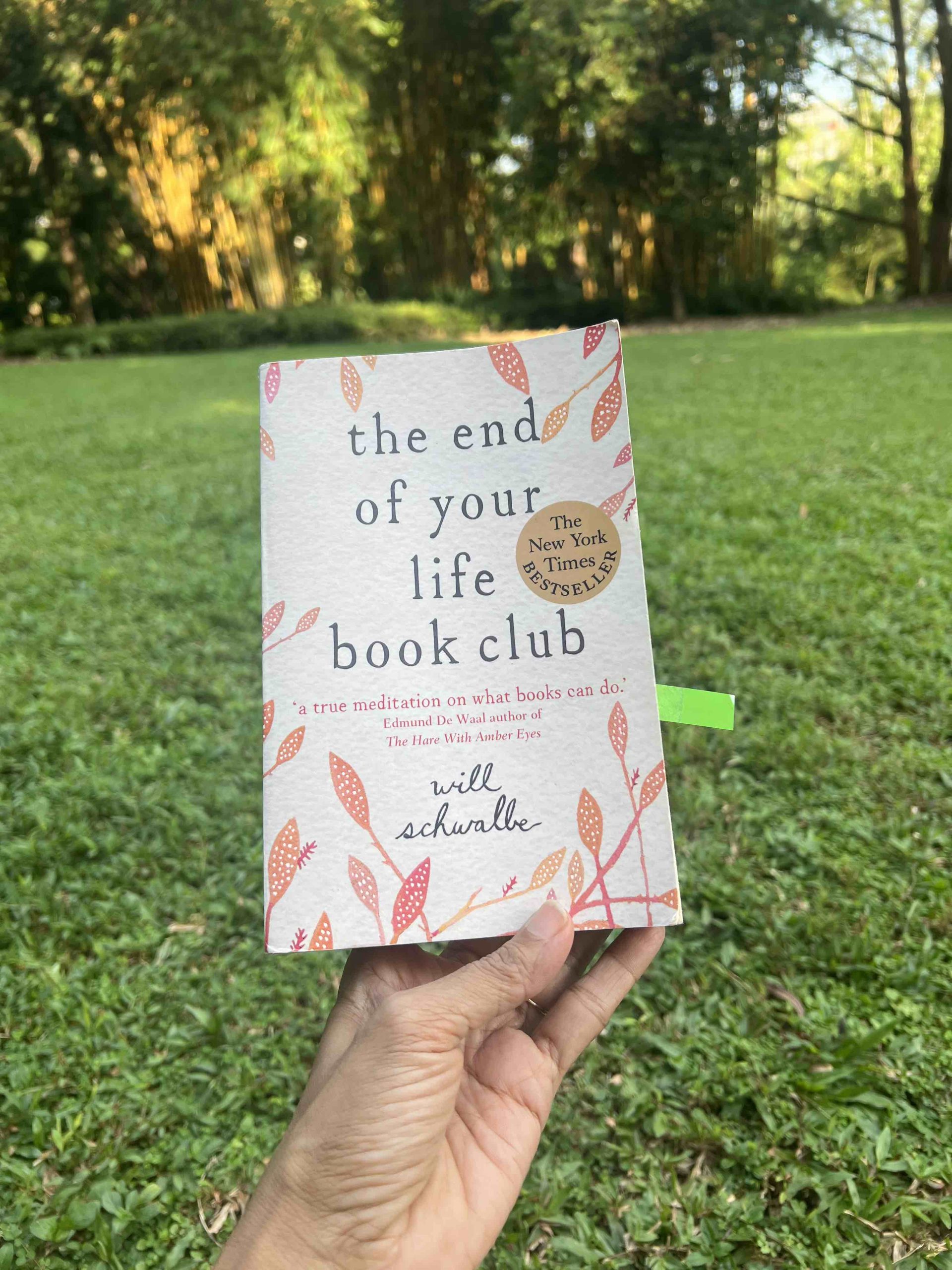
Recommended by a member of our bookclub, I was intrigued by the title and happily accepted the print copy that was available for sharing. As the title suggests, this New York Times bestseller is a personal account of a book club of two, the author and his mother, Mary Ann Schwalbe. It formally begins when Mary Ann is diagnosed with Stage 4 pancreatic cancer in her seventies. At that time she is busy trying to get a library built in Afghanistan.
Right at the outset, you know how it will end. But like any life, it’s what happens in the middle that makes this memoir truly memorable. Born into a family that reads, the author, an editor, is in the book business. Yet, it is his remarkable mother, who is the star of what could be a tragic tale that turns out to be a life-affirming narrative about the impact one person can have on her family and the world.
The book takes us through a two-year period in the author’s life as he accompanies his mother to her chemotherapy sessions following the dire diagnosis. It begins in the waiting room of the Memorial Sloan-Kettering’s outpatient center with one of my favorite questions “What are you reading?”. Soon we get to know that they discuss books, usually print copies (sometimes on the e-reader for the author) which both of them read simultaneously.
Names and context for the books, extracts of some, the discussions themselves are narrated simply, as if we are watching the duo interact in real time, along with updates on the personal lives of the family members, that have been upended by this diagnosis. As we move through chapters named after book titles (many of which I haven’t read), we get to know Mary Ann Schwalbe’s truly inspiring life. While being a fully-present and involved mother to her three kids (Will is the middle one), her other accomplishments are unbelievable.
Born in 1934, Mary Ann grew up and attended school in New York and college at Radcliffe. A few years after getting married, the Schwalbe family moves to Cambridge where she gets a job in the Radcliffe admissions office. Years later when the family moves back to New York she gets back to work at a school but after a life-changing trip to the Phillipines, she returns home to take up the position as the first director of the Women’s Commission for Refugee Women and Children, and travels all over the world into dangerous territories and continues to influence the organization till the very end of her life.
What makes the book special is the simple narrative style that let’s us in on family conversations, travels, doctor’s visits, Thanksgiving and birthday celebrations while weaving through a wide list of books by varied authors and genres, classics and contemporary ones, books of prayer and poetry that are brought to life through the cordial and deep discussions between the mother and son. The author’s love for his mother shines through in every anecdote because it is very difficult to not count the number of such sessions that they have together without getting morbid.
Mary Ann’s ability to focus on what is important, her fierce independence, her unwillingness to inconvenience others including family members, her gratitude for having access to the best medical care and consideration for those who do not have this privilege, her generosity of spirit, all of these facets are amply displayed through her everyday interactions in the two years after her diagnosis. During harsh New York winters they spend some time in Florida and in summers Mary Ann insists on attending concerts and recitals and participating in every significant social event while stoically enduring the treatments and its side effects. When the end finally comes, I shed tears for the loss of this wonderful human who continued to contribute in meaningful ways to causes that she cared about till her last breath.
Some of my favorite quotes/extracts from the book echo my sentiments:
“That’s one of the things books do. They help us talk. But they also give us something we all can talk about when we don’t want to talk about ourselves”.
About having it all: Mary Ann was told by her headmistress that women could have it all. And she did. But she was always tired. When she mentioned this to the headmistress years later at a reunion, the woman said “Oh, dear – did I forget to mention that you can, indeed, have it all, but you need a lot of help!”.
After that Mary Ann made a point to narrate this to the young women who came to her for advice, but also made sure they knew that help could come in many forms – an extended family, a stay-at-home spouse, or friends who were willing to pitch in, and of course, to any hired helpers a family might be able to afford”
About working outside the home and stay-at home: While supporting women’s choices –
“I don’t entirely approve of people who get advanced degrees and then decide to stay at home. I think if society gives you the gift of one of those educations and you take a spot in a very competitive institution, then you should do something with that education to help others. I know lots of people don’t agree with me on that” – I feel similarly about this.
My opinion: I started reading this to read a books about books but came away feeling inspired and humbled to read about the life of a role model. Highly recommend this memoir if you love books and a good true story.


I am amazed at how facile you are with words and wish I had that skill.
You’ve captured the essence of the book and can understand why I was so impressed by it and wished to share it.
Without giving any spoilers (other than the obvious one) , you’ve written enough to make others want to read it.