
What does it feel like
By
Sophie Kinsella
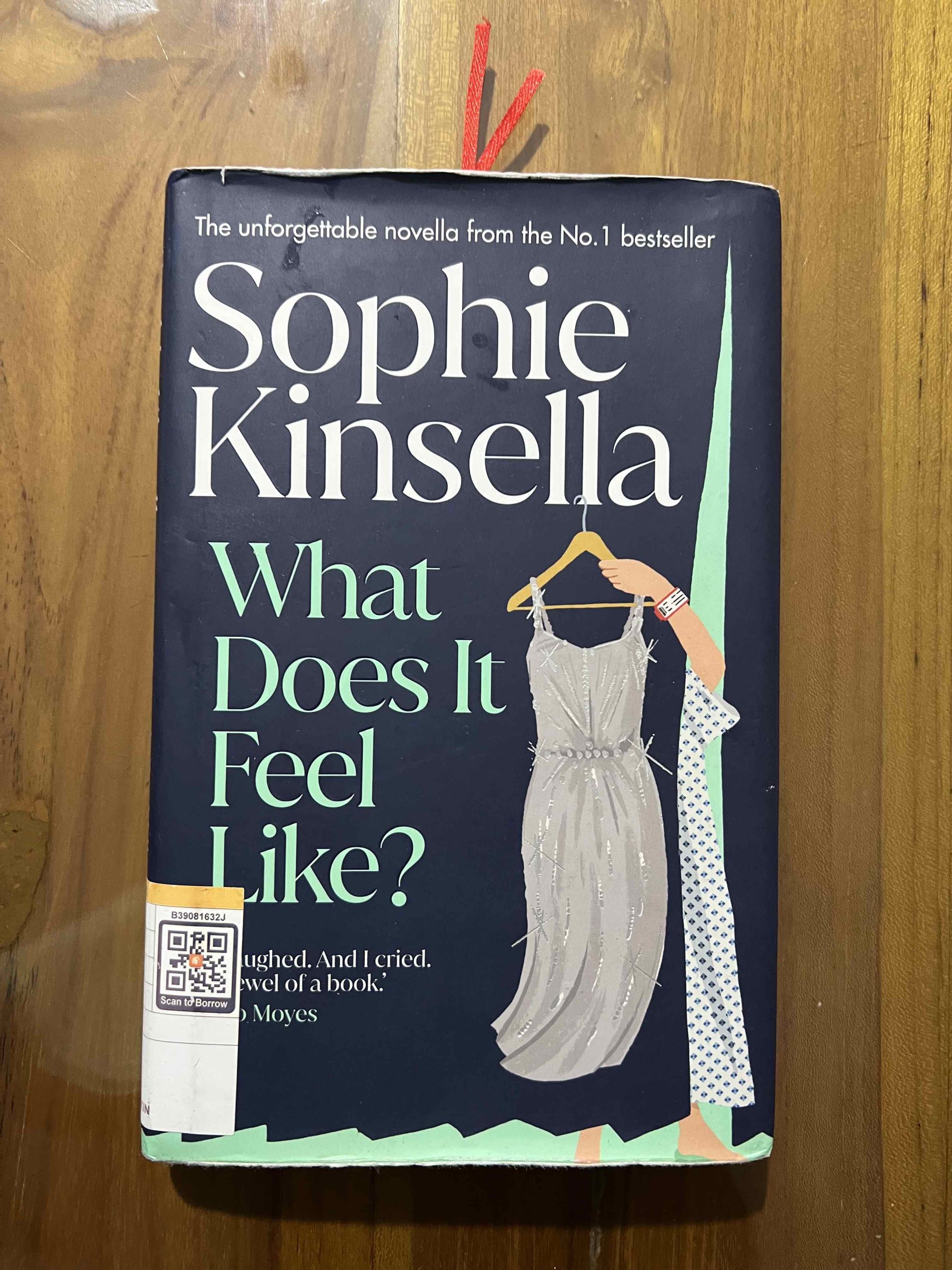
If you have ever been a fan of the genre that was once called “chick-lit”, you must have read Sophie Kinsella and her Shopaholic series. Although not a fan of the genre itself, I have enjoyed Kinsella’s breezy, humorous writing style with a loveable if bumbling protagonist during times when I needed a light-hearted pick-me-up.
Like millions of fans who mourned her untimely passing in Dec 2025 at the age of 55, I was shocked. I had not read many of her newer books but heard of her last novel which was a fictional recounting of her own tryst with glioblastoma.
On one of my recent visits to Bukit Panjang library (as part of my Singapore libraries project for 2026), I came across “What does it feel like”, her famous last novel and decided to give it a try.
It is a slim book, almost a novella featuring Eve Monroe, a successful writer in a happy marriage and five children. At the peak of her career success, right after the movie premier of her latest hit novel, she is diagnosed with a brain tumour and undergoes a long surgery to remove the tumour. While the operation is successful, the after-effects involve memory loss and relearning simple life tasks like walking. There are no long introspective passages. There are no convoluted plots, no surprise twists. There are simple sentences. Descriptions of mundane activities like physiotherapy. Ordinary conversations between a couple. A teary discussion when they break the news of her illness to their children. There are text messages from family and friends. Scans. Chemo.
It is no literary masterpiece, neither is it a full-sized novel that inevitably heads to a happy ending. The ordinariness of life before and after a dire diagnosis hits you in the small moments and everyday choices that are now loaded.
Should Eve try to check things off a bucket list? Should they travel? Should they try a once-in-a-lifetime adventure not knowing how long the post operative phase will last?
Eve decides to ditch the stunts and asks instead for a “normal plus” life. Do the same things they did everyday but a little bit nicer. Better seats at the movies. Nicer restaurants. Those kinds of things. Her choices didn’t feel radical, they felt regular and reassuring. The book ends on a day when Eve is feeling good and is able to resume some of her favorite activities but Kinsella’s life ended soon after the publication of this book.
My opinion: The sad undercurrent of this novel makes it special for discerning readers who understand that art imitates life and there are lessons embedded in such “slice of life” stories.
A Marriage At Sea
By
Sophie Elmhirst
With the intriguing title “A Marriage at Sea” and an even more interesting tagline “A true story of love, obsession and shipwreck”, this survival memoir of a British couple who were marooned at sea seemed like an interesting book.
Was the time spent together but adrift in the Pacific Ocean the big challenge to their marriage? Or was life before or after their crazy quest to sail from England to New Zealand in 1972 using very few gadgets and a simple boat the true challenge? I was curious.
The memoir starts with a fascinating shipwreck scene in which their boat is damaged by a whale. As they stare mesmerized by the sight of a 40-foot whale in the throes of death, their boat rapidly fills with water. They hastily pack emergency supplies including tins of food and cans of water, their journals, a sextant and other essentials and jump into the life raft with a dinghy attached to it and watch their boat slowly sink into the waters of the Pacific.
Then the story zooms out to give us the context for Maurice and Maralyn Bailey, narrating their back stories, their fortuitous meeting and marriage and their joint decision to choose a life very different from the suburban dreams of their peers in the UK in the late sixties. They sell their house, build a boat and set sail.
As the chapters progress we get insights into the characteristics and very different personalities of the couple. Maralyn is optimistic, disciplined and mentally strong. Maurice is an oddball who doesn’t fit into regular society life, is awkward around people and doesn’t seem enamored by the way people live their ordinary lives. He is the one with an adventurous spirit, varied interests and looks at life differently. He is attracted to Maralyn’s confidence and free spirit. Like him, she wants more than a job with a regular salary, a quaint house in the suburbs filled with kids.
Life on the raft is difficult. Days pass by without sighting any other boats. They decide to gauge their position and row purposefully towards the shipping lanes where they hope to be rescued by other ships. They get blown off course repeatedly and heartbreakingly, they see other ships that do not see them and sail away. They face harsh sun, intense rain, hunger, illness and melancholy as the days turn to weeks.
They each write their feelings in their journals; sometimes fantasising about elaborate dinner menus as the possibility of starvation looms in the horizon, sometimes making plans for their next voyage once they return to shore, sometimes playing games just to stay focused and sane.
Survival is not easy as their rations run out. They learn to catch and kill turtles, birds, fish using all of their skills and remaining strength. Maurice falls seriously ill but miraculously survives. Maralyn’s job is to not just be a good wife but she has to take over as captain and also to keep their spirits up as Maurice succumbs to depressive thoughts for his perceived failure as the ship’s captain to keep their ship from capsizing.
After 117 days at sea, the couple are rescued by a Korean fishing boat. They are found emaciated, sick and stinky but are welcomed aboard and treated gently and with kindness. As news of their miraculous survival finds its way to the news media, their life takes a wholly different turn. For a while they become celebrities. And embark on another voyage, this time to Patagonia.
The rest of the book gallops through the more mundane parts of Baileys’ life after their rescue where they are paid for telling their story, get book deals and are featured alongside celebrities on TV. The tone and pace of the book is very different and not as gripping. I guess it is true that when life goes as planned, it doesn’t really make for interesting storytelling.
Maurice outlives Maralyn, missing her every single day, acknowledging that his life was made infinitely better by his brave, strong, confident wife who knew how to manage him and the outside world, a skill he didn’t learn till the end.
My opinion: A fascinating tale of a true life adventure at sea but also a commentary on what (and who) makes a marriage work because whether at sea or land, it is definitely work!



0 Comments